Views: 0 Author: Site Editor Publish Time: 2026-08-12 Origin: Site
Grams per Square Meter (GSM) serves as the only objective, quantifiable metric for evaluating fabric density. It strips away subjective marketing terms like plush, luxury, or ultra-soft. Many consumers purchase a towel set based purely on superficial criteria like color or aesthetic reviews. This buyer blindspot frequently leads to operational failure. Selecting linens while assuming the highest GSM is always best creates distinct problems. It often leads to fabrics that harbor mildew in humid climates. Heavy textiles also increase energy consumption during drying cycles and degrade rapidly under rigorous laundering conditions. We must establish a technical evaluation framework. This framework aligns GSM specifications with environmental factors like bathroom ventilation and local climate. It also accounts for laundering infrastructure and material construction. You will learn how to guarantee performance and long-term viability for your daily use linens.
GSM Dictates Function, Not Just Quality: A lower GSM (300-400) prioritizes rapid drying and portability, while a higher GSM (600-900) maximizes absorbency and thermal retention.
The Mid-Range Sweet Spot (400-600 GSM): This range offers the most balanced performance for everyday residential and standard commercial use, balancing moisture wicking with manageable drying times.
The Everyday Bathing Threshold: For standard residential bathing comfort, a minimum of 500 GSM is recommended to achieve the necessary balance of tactile softness and water absorption.
Material Synergy Matters: GSM must be evaluated alongside fiber staple length (e.g., Turkish vs. Egyptian cotton) and weave structure; a 500 GSM zero-twist towel performs differently than a 500 GSM standard terry.
Environmental Constraints: High-GSM towels require optimal ventilation and high-capacity drying infrastructure; failing to account for this increases operational costs through extended laundering cycles and premature replacement.
Grams per Square Meter measures the physical mass of the fabric over a specific area. This metric relies on fundamental textile physics. Loop density and pile height drive this final number. Weave density dictates how much cotton occupies that square meter. Manufacturers adjust the base weave and the pile loops to hit specific weight targets. A higher density of loops packs more cotton into the same physical footprint. Taller loops also increase the total mass. This measurement provides a standardized baseline across all textile manufacturing. It removes the guesswork from evaluating fabric thickness.
GSM translates directly to physical touch and handling characteristics. Low GSM yields a light, thin, and highly packable fabric. These textiles fold flat and occupy minimal shelf space. High GSM produces a thicker, heavier, and more cushioned profile. The fabric feels substantial and drapes heavily over the body. You can physically feel the density when compressing the loops between your fingers. The weight difference becomes even more pronounced when the fabric absorbs water. A heavy textile holds significantly more liquid mass than a lighter one.
Cotton mass directly correlates with water retention capacity. More cotton loops mean more surface area to trap water molecules. Capillary action draws moisture into the hollow core of the cotton fibers. A dense pile provides thousands of additional contact points to pull water from the skin. This linear relationship means a 700 GSM fabric will always absorb more total water than a 400 GSM fabric of the same material. However, absorption speed depends on the weave structure rather than just the raw weight.
We must debunk the persistent myth that higher is always better. Maximum density is not always optimal for every situation. A 900 GSM fabric is actively detrimental in high-humidity environments. It traps moisture deep within the dense pile. This trapped moisture breeds bacteria and creates musty odors. Extremely heavy textiles also require massive amounts of thermal energy to dry completely. Purpose-driven selection matters more than the blind pursuit of maximum density. You must match the fabric weight to the specific environmental and operational constraints of the space.
This weight category prioritizes high breathability and rapid evaporation. The fabric maintains a low spatial footprint. It folds down into compact squares for easy storage. The tactile feel leans toward thin and slightly coarse. The loops are shorter and spaced further apart. This structure allows air to pass through the fabric easily. Moisture evaporates quickly even in poorly ventilated spaces. The lightweight nature makes these textiles incredibly easy to handle in bulk.
These functional textiles excel in specific, high-turnover applications. Gym facilities and physical therapy clinics rely on them heavily. They work perfectly for travel due to their low weight and packability. Kitchen environments benefit from their rapid drying capabilities. High-turnover commercial spaces need textiles that wash and dry quickly. The fast processing time keeps inventory moving efficiently through the laundry cycle.
Implementation reality requires careful management of physical wear. These lighter fabrics are prone to faster degradation if subjected to harsh chemical laundering. Chlorine bleach and high-alkaline detergents break down the thin cotton fibers quickly. Manufacturers often use tighter weave structures to maintain structural integrity. You must balance the fast drying time against a potentially shorter operational lifespan. Successive wash cycles will thin out a 300 GSM fabric much faster than a heavier alternative.
The mid-weight category represents the industry standard for general use. It balances tactile comfort with operational efficiency perfectly. The pile is dense enough to feel soft against the skin. The base weave remains open enough to allow reasonable airflow. This balance makes it the most versatile option on the market. You get adequate moisture absorption without the punishing drying times of heavier fabrics. It hits the sweet spot for most standard applications.
Everyday home bath linens perform best at the 500+ GSM mark. This specific threshold provides the essential thickness required for personal care. It absorbs surface water from the body quickly and completely. The fabric retains enough heat to keep you warm after a shower. Yet, it does not require excessive drying times in a standard residential machine. This weight delivers the expected comfort level without creating laundry bottlenecks.
Ideal applications span daily residential use, guest bathrooms, and boutique accommodations. These environments demand a balance of luxury and practicality. You must assess how this range handles daily laundering. It typically survives standard wash cycles without requiring extended high-heat dryer runs. This efficiency minimizes fiber degradation over time. The mid-weight fabric maintains its structural integrity through hundreds of standard wash and dry cycles.
Premium heavyweight fabrics deliver maximum absorbency and a highly dense pile. They offer high thermal retention, keeping the user exceptionally warm. The superior tactile softness provides a distinct feeling of luxury. The loops are packed tightly together and stand tall off the base weave. This construction creates a deep, cushioned surface. The fabric feels heavy and substantial, draping securely over the shoulders.
These textiles belong in luxury spas, winter climates, and high-end hospitality environments. They require specific infrastructure to manage their mass. Integrating Hotel Premium Quality 600gsm Towels into a facility requires careful planning. You must have industrial-grade drying capacity. The bathrooms must feature excellent ventilation to prevent moisture retention between uses. Failing to provide adequate airflow will ruin these premium textiles quickly.
Fiber staple length drastically alters how a specific GSM performs. Egyptian and Turkish cottons produce long-staple fibers. These longer fibers allow spinners to create stronger, smoother yarns. A 500 GSM long-staple textile will outlast a 700 GSM short-staple alternative. The long fibers resist pilling and breaking under mechanical stress. They also feel inherently softer because there are fewer exposed fiber ends in the yarn.
Blends and synthetics change the physical weight-to-performance dynamic completely. Introducing bamboo rayon increases absorbency but extends drying time. Bamboo holds water more aggressively than cotton. Microfiber blends alter the GSM-to-absorbency ratio entirely. A 300 GSM microfiber fabric might absorb as much water as a 600 GSM cotton fabric. You must evaluate the material composition alongside the raw weight to understand the true performance profile.
Weave structures manipulate how the fabric utilizes its mass. Waffle weaves achieve high surface area for rapid drying at lower weights. The honeycomb structure creates pockets that trap water without relying on dense pile. Standard terry cloth relies entirely on loop density for absorption. The loops act like tiny sponges standing off the base fabric. The chosen weave dictates how the fabric interacts with moisture and air.
Yarn engineering also plays a critical role in perceived density. Zero-twist yarns create a softer feel and higher perceived volume. The fibers are bound together with a temporary synthetic thread that dissolves during finishing. This leaves the cotton fibers completely untwisted and open. A zero-twist fabric feels much thicker and softer at a lower actual GSM. Ring-spun yarns twist the fibers tightly together, creating a more durable but slightly flatter pile.
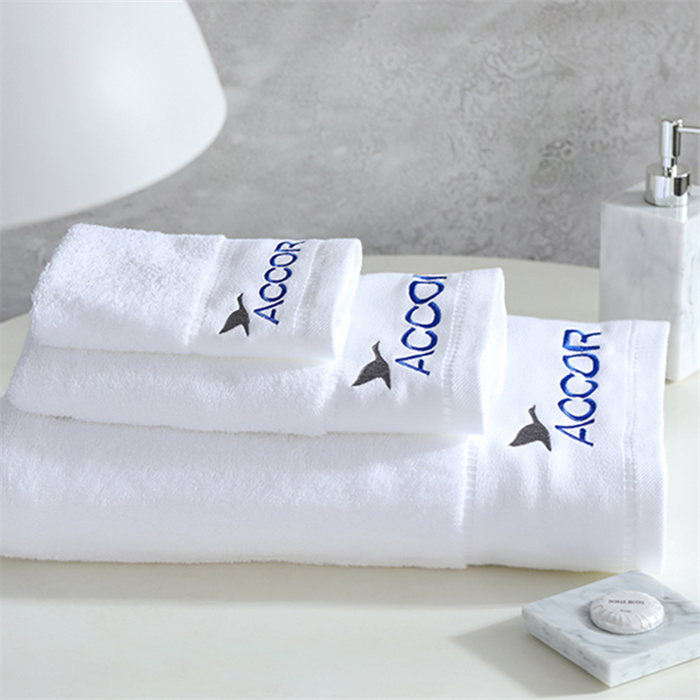
Embroidery and branding demand specific structural requirements. You cannot embroider a loosely woven, lightweight fabric successfully. The tension of the embroidery thread will pull the base weave apart. A Hotel Custom Cotton Embroidered Towel requires a stable, mid-to-high GSM base. Typically, you need at least 500 GSM to support dense stitching. This density prevents puckering and bunching around the logo. It maintains the integrity of the embroidery under tension during laundering.
GSM Range | Primary Characteristics | Ideal Environment | Drying Infrastructure Needed |
|---|---|---|---|
300 - 400 | Lightweight, fast-drying, compact | Gyms, clinics, humid climates | Standard or low-heat drying |
400 - 600 | Balanced absorbency, moderate weight | Daily residential, guest baths | Standard residential drying |
600 - 900+ | Maximum density, high thermal retention | Luxury spas, dry/winter climates | High-capacity, extended drying |
High-density fabrics carry significant environmental risks. Deploying 700+ GSM textiles in poorly ventilated spaces guarantees problems. High-humidity environments prevent the dense pile from drying completely between uses. This trapped moisture creates a breeding ground for bacterial growth. Musty odors develop within days. Eventually, the constant dampness leads to fabric rot. The cotton fibers break down prematurely, destroying the textile.
Energy consumption scales directly with fabric weight. Heavy textiles retain massive amounts of water after the extraction cycle. They require significantly more time in the tumble dryer. This increased dryer time translates to higher energy expenditure per wash cycle. You must calculate the operational impact of running dryers for an extra twenty minutes per load. The thermal energy required to evaporate water from a 800 GSM fabric is substantial.
Laundering environments dictate the lifespan of the fabric. Commercial laundering introduces harsh chemical exposure and severe mechanical stress. High-alkaline detergents and industrial extractors punish cotton fibers. High-GSM fabrics offer more physical material to wear away over time. They can survive more aggressive wash cycles before thinning out completely. However, low-GSM fabrics cost less to replace at scale when they eventually fail.
Lifecycle management requires predicting operational lifespan accurately. You must base this prediction on the GSM and the expected wash frequency. A 500 GSM fabric washed twice weekly will degrade at a predictable rate. You can map out replacement schedules based on these variables. Tracking the degradation of the pile height helps identify when the fabric no longer meets performance standards. Proper management prevents degraded textiles from remaining in circulation.
Misjudging shrinkage leads to severe aesthetic issues. Dobby border shrinkage is a common failure point. The decorative band woven into the fabric often shrinks at a different rate than the terry body. When the high-GSM terry body shrinks less than the border, the fabric warps. The edges pull inward, creating a permanent hourglass shape. You must verify that the manufacturer pre-shrinks the borders to match the body tension.
Ignoring the break-in period causes immediate frustration. High-GSM fabrics shed loose fibers during their initial wash cycles. This shedding is a normal part of the manufacturing process. You must set realistic expectations regarding this initial lint production. Pre-washing is absolutely necessary to activate absorbency. The manufacturing process coats the fibers in sizing and silicone softeners. You must strip these chemicals away to allow the cotton to absorb water.
Inconsistent density across a bundled set deceives buyers. Manufacturers sometimes bundle products with mismatched specifications. The main bath piece might measure 600 GSM, but the hand pieces drop to 400 GSM. This downgrade often happens without transparent labeling. You must verify the specific weight of every individual piece in the bundle. Consistent density ensures uniform performance and matching degradation rates across the entire collection.
Audit your bathroom ventilation systems to ensure they can handle the moisture load of your target GSM.
Evaluate your current laundering infrastructure to confirm it can dry heavier textiles efficiently without excessive heat.
Request fiber-staple verification from suppliers to ensure you are buying long-staple cotton for better durability.
Implement a mandatory pre-wash protocol to strip manufacturing sizing and activate the fabric's absorbency.
A: The optimal range for daily use falls between 400 and 600 GSM. A density of 500+ GSM provides the best balance. It offers sufficient absorbency and tactile softness while maintaining a manageable drying speed for standard home use.
A: Yes, in most standard environments. They become exceptionally heavy when wet and require extended drying times. They are generally unsuited for humid climates or standard residential dryers, as trapped moisture quickly leads to mildew.
A: GSM stands for Grams per Square Meter. It is the standard technical measurement of fabric density and weight. It dictates how thick, heavy, and absorbent the textile will be.
A: Not necessarily. While they possess more physical mass to wear down, durability is more heavily dictated by fiber staple length and weave quality. A 500 GSM long-staple cotton fabric often outlasts a 700 GSM short-staple fabric.
A: Standard hotels typically use 400-500 GSM fabrics to maximize operational efficiency and reduce laundry turnaround times. Luxury properties utilize heavier options, often deploying 600 GSM or higher to provide a premium guest experience.
A: Musty odors result from trapped moisture. Dense fabrics require significant airflow and heat to dry completely. If left in a humid bathroom or under-dried in the machine, bacteria breed in the damp loops, causing the smell.
A: Yes. Denser loops can experience varied shrinkage rates compared to the flat base weave. This is especially true if washed in excessively hot water. The mismatch in shrinkage often causes the fabric borders to warp or pucker.