Views: 0 Author: Site Editor Publish Time: 2026-08-25 Origin: Site
Waking up in a five-star hotel delivers a universally recognized, restorative sleep experience. Standard residential beds rarely match this comfort, often degrading rapidly and leaving sleepers with morning stiffness. Consumers and boutique hospitality buyers struggle to replicate this premium feel because retail markets obscure technical specifications behind heavy marketing jargon. You cannot simply buy a bed with a luxury label and expect hospitality-level performance.
Replicating five-star comfort requires a technical teardown of commercial sleep systems. You must understand material densities, zoned structural engineering, and the specific procurement criteria used by luxury hospitality brands. Furthermore, rigorous maintenance protocols play a massive role in preserving structural integrity. We will examine exactly how these elements combine to create the ultimate sleep environment, focusing on the engineering that separates commercial-grade beds from standard retail options.
Universal Comfort Baseline: Luxury hospitality relies on a highly specific medium-firm structural core paired with plush comfort layers to accommodate the maximum percentage of sleep positions and body types.
Zoned Engineering is Non-Negotiable: True commercial comfort relies on targeted pressure relief systems, transitioning from standard designs to advanced multi-zone architectures.
Material Integrity Over Trends: Five-star properties prioritize high-density, temperature-regulating materials (like natural latex and high-gauge steel hybrids) over low-density, heat-trapping foams.
Systematic Layering & Presentation: The mattress is only the foundation; the complete "hotel bed feel" requires a calculated ecosystem of mattress, topper, encasement, breathable linens, and strict maintenance schedules.
A commercial mattress must achieve several strict success criteria simultaneously. It must provide consistent support for vastly diverse body types night after night. It requires zero motion transfer to ensure couples do not disturb one another. Most importantly, it must maintain its structural integrity over thousands of continuous sleep cycles without sagging or forming permanent body impressions.
The fundamental difference between commercial and residential beds lies in material density requirements. High-end hotel mattresses utilize high-density foams and low-gauge steel coils. Foam density directly dictates durability and resistance to mechanical fatigue. While a standard retail bed might use 1.5 PCF (pounds per cubic foot) polyurethane foam in its comfort layers, hospitality standards demand 2.0 PCF or higher. This denser cellular structure resists compression and breakdown over years of heavy use.
Coil gauge operates on a similar principle. Lower numbers indicate thicker steel wire. Commercial innersprings frequently utilize 13-gauge or 14-gauge steel for the primary support core, compared to the thinner 15-gauge wire found in budget residential models. Hospitality procurement standards demand absolute resistance to edge sagging. A bed in a commercial setting experiences high turnover and extreme edge use. Guests frequently sit on the edges to put on shoes, pack suitcases, or work on laptops. Reinforced perimeters, often built with 3-inch thick high-density foam rails, ensure the mattress survives a rigorous five-to-seven-year lifecycle without collapsing.
Luxury properties cannot customize beds for every individual guest. They must hit a universal comfort metric that satisfies back, side, and stomach sleepers alike. The industry standard is a medium-firm base. On a standard firmness scale of one to ten, this sits precisely at a six or seven. This specific rating provides the necessary pushback to keep the spine aligned while offering enough surface yield to relieve pressure points.
The biomechanics of spinal alignment explain why extreme firmness or extreme softness fails in a commercial setting. A mattress that is too firm forces the shoulders and hips out of alignment, causing lower back pain for side sleepers. A mattress that is too soft allows the heavier pelvic region to sink deeply, creating a hammock effect that strains the lumbar spine. The medium-firm core bridges this gap perfectly, providing a stable foundation that accommodates the widest statistical range of human body weights.
Understanding the primary material architectures used in luxury hospitality reveals exactly how these beds perform. Engineers select specific components to achieve targeted performance outcomes. We can break these down into distinct solution categories based on their physical properties and longevity.
Memory foam offers excellent motion isolation and deep contouring. It absorbs kinetic energy efficiently, making it ideal for restless sleepers. However, traditional memory foam retains significant body heat. If the foam is not properly infused with cooling gels, copper particles, or phase-change materials, it creates an uncomfortably warm sleep environment. Furthermore, low-density memory foam degrades quickly under commercial use, losing its rebound capacity.
Because of these thermal and durability challenges, many luxury properties upgrade to a premium hotel latex mattress. Natural latex provides superior responsiveness. It contours to the body without creating that sinking, stuck feeling associated with dense memory foam. Latex features an open-cell structure that naturally promotes airflow and breathability. It is inherently hypoallergenic, resisting dust mites and mold. Furthermore, latex boasts a significantly longer lifespan before deformation occurs. A high-quality latex core can withstand a decade of heavy use without losing its structural integrity.
Modern hospitality beds rarely rely on continuous wire coil systems. Individually pocketed coils are an absolute requirement. Each steel spring is wrapped in its own fabric encasement. This allows the coils to compress independently. When pressure is applied to one side of the bed, the surrounding coils remain undisturbed. This motion isolation is required for couples sharing a sleep surface.
Hybrid designs represent the peak of commercial sleep engineering. They bridge the gap between the deep, robust support of steel coils and the immediate pressure relief of foam or latex top layers. The pocketed coil core handles weight distribution and spinal alignment. The upper comfort layers handle joint cushioning and surface plushness. A standard commercial King-size hybrid will typically feature between 800 and 1,200 individual pocketed coils to ensure granular support.
A neutral sleep temperature is required for restorative rest. Commercial beds integrate advanced thermal regulation technologies directly into the upholstery layers. Phase-change materials absorb excess body heat and release it when the ambient temperature drops. Perforated foams create vertical ventilation channels, allowing hot air to escape the mattress core with every movement the sleeper makes.
Natural batting materials also play a major role in thermal management. Layers of organic cotton and wool are frequently quilted directly into the mattress cover. Wool acts as a natural thermoregulator, wicking moisture away from the skin and maintaining a dry, comfortable microclimate throughout the night.
Material Type | Primary Advantage | Thermal Properties | Commercial Lifespan |
|---|---|---|---|
High-Density Memory Foam | Deep contouring and motion isolation | Requires gel infusion for cooling | Moderate to High |
Natural Latex | Instant responsiveness and durability | Naturally breathable open-cell structure | Very High |
Pocketed Coil Hybrid | Robust support and edge integrity | Excellent airflow through coil core | High |
Continuous Wire Innerspring | Rigid, uniform support | Good airflow, but poor motion isolation | Low to Moderate |
Standard mattresses offer uniform resistance across the entire surface. Human bodies, however, do not distribute weight evenly. The hips and shoulders carry significantly more mass than the head or lower legs. Advanced ergonomic engineering uses zoned support to address this biological reality.
Variable resistance across the length of the bed prevents the hammock effect. It ensures the heavier parts of the body receive robust support while the lighter parts receive gentle cushioning. This targeted approach relieves joint pressure and maintains neutral spinal alignment, which is the primary reason guests wake up pain-free in luxury hotels.
A high-quality 5 zones hotel mattress breaks the sleep surface down into distinct anatomical regions. The engineering relies on varying the firmness of the coils or the Indentation Load Deflection (ILD) of the foam in each specific sector.
Head and Neck Zone: Medium firmness to support the cervical spine without causing pressure on the back of the head.
Shoulder Zone: Softer, more yielding materials. This allows the shoulders to sink slightly into the mattress, which is required for side sleepers to prevent numbness in the arms.
Lumbar Zone: Heavily reinforced with firmer materials to push back against the lower spine, preventing it from collapsing downward.
Hip and Pelvic Zone: Medium-firm support to cradle the heaviest part of the body while keeping it level with the spine.
Lower Leg Zone: Medium-soft cushioning to promote blood circulation in the calves and feet.
For ultimate orthopedic benefits, top-tier properties utilize a 9 zones luxury hotel mattress. This architecture introduces micro-adjustments across the entire sleep surface. It offers hyper-targeted support that accommodates micro-movements and varying sleeper heights with incredible precision.
The nine zones break down the support even further, addressing the head, cervical spine, shoulders, thoracic spine, lumbar, pelvis, knees, lower legs, and feet. This granularity ensures that regardless of a guest's height or preferred sleep position, their joints align perfectly with the corresponding support zones. Upgrading to a 9-zone system provides a massive return on investment in terms of sleep quality and perceived luxury.
A mattress is only as good as its perimeter. Weak edges make a bed feel significantly smaller and create a feeling of rolling off. Commercial beds utilize high-density foam encasements or heavily reinforced perimeter coils to lock the core in place.
This edge support directly links to the perception of a larger sleep surface. It allows guests to sleep right up to the edge of the bed without structural collapse. It also provides a firm, stable seating area, making it much easier to get in and out of bed. Combined with the pocketed coil core, this structural integrity guarantees exceptional motion isolation.
The secret to five-star comfort extends far beyond the springs and foam. The mattress core provides the necessary structural support. The top layers provide the immediate, tactile comfort. Understanding these conceptual trade-offs is required for replicating the experience.
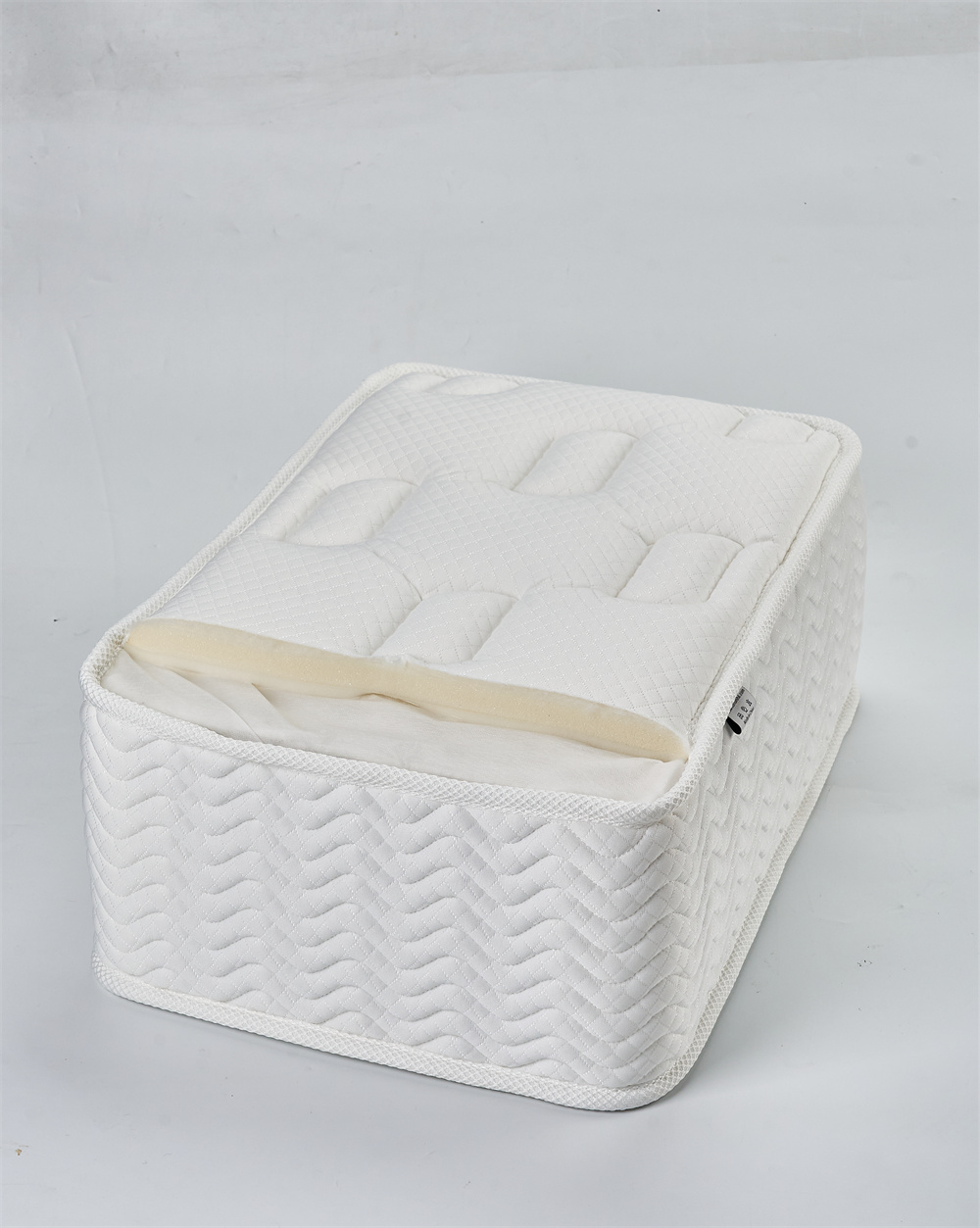
Hospitality beds frequently feature thick, integrated toppers. It is important to differentiate between tight-top, pillow-top, and Euro-top constructions. A tight-top has no additional padding attached to the surface. A pillow-top features a distinct layer of padding sewn onto the top of the mattress, leaving a visible gap or V-shaped indentation at the edges.
A Euro-top is the preferred choice for luxury properties. The padding is sewn flush with the edges of the mattress, creating a clean, uniform look. Hotels use these thick, gusseted toppers to create that initial cloud-like feel. The guest experiences immediate plushness and pressure relief, but their body weight is ultimately caught and supported by the firm, zoned core beneath.
The mattress's cooling features are completely negated if covered by cheap, heat-trapping polyester sheets. Hotels amplify the bed's breathability through highly specific bedding choices. They utilize crisp cotton percale weaves. Percale is a one-over, one-under weave that creates a matte finish and a highly breathable, cool-to-the-touch fabric. Hospitality standards usually dictate a thread count between 250 and 300 for optimal durability and airflow.
This crisp foundation is paired with temperature-regulating down or high-quality down-alternative duvets. The combination of the responsive mattress surface, the plush Euro-top, and the crisp, breathable linens creates a microclimate optimized for deep sleep.
Bedding Layer | Material Specification | Primary Function |
|---|---|---|
Mattress Encasement | Polyurethane membrane | Waterproof protection, allergen barrier |
Fitted Sheet | 100% Cotton Percale (250-300 TC) | Breathability, crisp tactile feel |
Duvet Insert | Goose Down or Gel-Fiber Alternative | Lightweight thermal regulation |
Duvet Cover | 100% Cotton Percale or Sateen | Hygiene, aesthetic presentation |
Hygiene and longevity are non-negotiable in commercial settings. Hotels protect their substantial investments with specialized encasements. These are not the crinkly, plastic covers of the past.
Modern commercial protectors are waterproof, highly breathable, and bed-bug-proof. They utilize advanced polyurethane membranes that block liquids and allergens while allowing air vapor to pass through freely. This protects the structural integrity of the foams and fibers without altering the carefully engineered feel of the mattress.
Even the most advanced sleep system will degrade without proper care. The hidden variable behind consistent hotel comfort is rigorous, systematic maintenance. Hospitality management does not leave mattress longevity to chance.
Hotels implement strict housekeeping schedules to manage mattress wear. Staff regularly flip and rotate the mattresses. While many modern hybrid beds are single-sided and cannot be flipped, they must still be rotated head-to-foot on a quarterly basis.
This rotation schedule prevents permanent body impressions from forming in the comfort layers. It ensures the high-density foams wear evenly over time. By distributing the mechanical stress across different sections of the bed, the property extends the life of the mattress significantly and maintains that day-one comfort level for years.
Comfort is not purely physical; it is heavily psychological. The visual presentation of a hotel bed triggers a relaxation response before the guest even lies down. Deep cleaning protocols ensure the sleep environment is pristine.
The skilled, tight presentation of the bed linens creates a feeling of order and luxury. The crispness of the sheets, the flawless alignment of the pillows, and the immaculate cleanliness all contribute to the psychological perception of ultimate comfort. You cannot separate the physical engineering of the mattress from the meticulous presentation of the bed.
Navigating the market to purchase commercial-grade sleep systems requires caution. Retail environments are flooded with marketing fluff. Buyers must know how to secure authentic products and mitigate implementation risks.
Buying directly from hospitality supply chains differs vastly from purchasing retail brands that simply license a hotel's name. A licensed retail bed often lacks the heavy-duty specifications of the actual commercial model. When looking for authentic hotel mattresses for sale, you must verify the technical specifications.
Always request detailed cutaways of the mattress interior. Check the Indentation Load Deflection (ILD) ratings of the foam layers to verify density. Demand exact pocketed coil counts and steel gauge measurements. Authentic commercial suppliers will provide these specification sheets transparently.
Purchasing commercial beds involves specific logistical realities. These mattresses are exceptionally heavy due to the high-density materials and steel cores. White-glove delivery requirements are often necessary to navigate tight residential staircases or boutique hotel corridors.
Furthermore, understand the difference between commercial and residential warranty clauses. A bed used in a high-turnover hotel will have a different warranty structure than one placed in a private home. Ensure you clarify freight costs, return policies, and trial periods before finalizing any procurement contract.
The market is saturated with products labeled "hotel style" or "resort inspired." These labels are virtually meaningless. They are marketing gimmicks designed to upcharge standard residential beds.
These imitation products almost always lack the requisite zoning, heavy-duty edge support, and high material density of actual hospitality beds. If a supplier cannot provide the foam density metrics or explain their zoned ergonomic engineering, you are likely looking at a counterfeit commercial product. Stick to suppliers who specialize in institutional and hospitality procurement.
Audit your current sleep setup to identify specific areas lacking ergonomic support or temperature regulation.
Request technical specification sheets from specialized commercial suppliers to verify pocketed coil counts and foam PCF ratings.
Select a 5-zone or 9-zone hybrid or latex core that matches a medium-firm base with a high-quality Euro-top.
Upgrade your linen ecosystem with 250-300 thread count cotton percale sheets and a breathable polyurethane encasement to protect the mattress core.
A: Luxury hotels must accommodate the widest possible range of body weights and sleep positions. A medium-firm core provides the statistical sweet spot. It offers enough pushback to keep the spine aligned for back and stomach sleepers, while providing enough surface yield to relieve joint pressure for side sleepers, preventing morning back pain.
A: The difference lies in the granularity of ergonomic support. A 5-zone system covers major body regions like the head, shoulders, lumbar, hips, and legs. A 9-zone architecture offers hyper-specific pressure relief, accommodating micro-adjustments and varying sleeper heights by targeting smaller anatomical areas with precise firmness levels.
A: While high-density memory foam is still used in some properties, luxury tiers increasingly favor natural latex. Latex offers superior long-term durability, inherent cooling properties through its open-cell structure, and immediate responsiveness that prevents the stuck feeling often associated with traditional memory foam.
A: In a commercial hotel setting with extreme use and high turnover, mattresses are typically replaced every five to seven years to maintain peak performance. However, if that exact same commercial-grade mattress is used in a residential setting with proper rotation, it can easily last ten to fifteen years.
A: Many major luxury chains have exclusive contracts with manufacturers or sell their beds directly through proprietary retail boutiques. However, identical unbranded models featuring the exact same commercial specifications can often be sourced directly from hospitality supply chains or the original manufacturers.
A: The plush feel comes from the strict separation of support and comfort layers. The firm pocketed coil or dense foam core provides the structural support. The immediate plushness is achieved by adding a thick Euro-top, a heavy down featherbed topper, and high-quality, breathable linens over that firm base.