Views: 0 Author: Site Editor Publish Time: 2026-07-22 Origin: Site
The selection of premium textiles requires balancing tactile guest experience with rigorous operational demands, moving beyond basic thread counts to evaluate core fiber properties. Procurement teams and luxury buyers face a trade-off between the rapid drying and longevity of pure flax versus the immediate plushness and familiarity of cotton blends. These material choices directly impact laundering efficiency, replacement cycles, and the overall sensory experience delivered to users.
This guide provides a technical comparison of pure flax and cotton blend textiles, analyzing absorbency, durability, lifecycle return on investment, and commercial viability. By examining the biological structure of these fibers and their behavior under heavy commercial laundering, buyers can make evidence-backed purchasing decisions that align with their operational capabilities and brand standards.
Terminology Clarification: Flax refers to the raw plant fiber (Linum usitatissimum), whereas linen is the finished textile woven from these fibers.
Drying & Thermal Regulation: Pure flax absorbs moisture rapidly, dries significantly faster than cotton blends, and offers superior post-bath temperature regulation (cooling vs. heat-trapping).
Tactile Evolution: Cotton blends offer immediate, familiar softness out of the box, whereas pure flax requires a brief break-in period, starting with an invigorating, textured feel that softens progressively and resists flattening.
Lifecycle ROI: While pure flax commands a premium initial investment—often double the cost of high-grade cotton—its tensile strength yields a significantly longer operational lifespan.
Use-Case Specificity: Cotton blends remain the legacy standard for ultra-plush hospitality environments, while pure flax is the modern choice for boutique, eco-conscious, or spa settings prioritizing hygiene and distinct aesthetic appeal.
Defining the baseline success criteria for premium bath linen requires an understanding of raw material composition and plant biology. Absorbency, structural integrity, and skin feel are entirely dictated by the cellular makeup of the fibers chosen for weaving. When you evaluate textiles for high-turnover environments, you have to look past the initial hand-feel and examine the microscopic properties of the yarn.
Consumer and procurement confusion often surrounds the terms flax and linen. Flax is the resilient plant source cultivated in temperate climates. Linen is the high-strength textile produced from the stalks of this plant. Labeling transparency matters immensely in wholesale procurement and guest-facing material specifications. Specifying 100% pure flax guarantees the presence of these specific plant fibers, whereas generic "linen-feel" labels often mask synthetic blends. You need to verify the exact fiber content on the manufacturer's spec sheet before approving any large-scale purchase order.
Derived entirely from the Linum usitatissimum plant, pure flax features longer, thicker staple fibers compared to standard cotton. This biological advantage results in unmatched tensile strength. Furthermore, flax fibers possess an inherent hollow core structure. This microscopic anatomy facilitates natural temperature regulation, rapid moisture evaporation, and a unique resistance to flattening or fading over time. The structural rigidity of the flax fiber ensures the woven textile maintains its shape through extensive use. When subjected to the mechanical action of commercial washing extractors, these long fibers resist the micro-abrasions that typically cause cotton to pill and degrade.
Cotton blends often mix cotton with synthetic fibers like polyester to enhance structural durability, or blend cotton with linen to capture the breathability of flax alongside the immediate softness of cotton. Cotton utilizes shorter staple fibers spun to trap air, creating the traditional plush, terry-cloth loop structure. While blending enhances tear resistance and lowers initial costs, it often sacrifices the pure breathability and antimicrobial properties inherent to natural flax. Manufacturers engineer these blends to hit specific weight targets and drying times, but the inclusion of synthetics can lead to static buildup and a reduction in overall moisture absorption capacity over the lifespan of the product.
Mapping material features to direct user outcomes and operational realities reveals stark contrasts between pure flax and cotton blends. Performance metrics must account for moisture handling, tactile feel, and degradation over time. You cannot evaluate a textile based solely on its performance out of the box; you must test it after fifty wash cycles to understand its true operational value.
Pure flax can absorb up to 20% of its weight in moisture before feeling damp. Its rapid evaporation rate prevents musty odors and provides a refreshing cooling effect immediately after use. Conversely, cotton blends have higher absolute water retention, making them ideal for heavy water trapping. However, they retain moisture much longer, acting as heat-trappers that require extended machine drying times and are more susceptible to mildew if left in damp environments. In a humid spa setting, a cotton terry product will stay wet for hours, whereas a flax waffle weave will dry completely in a fraction of the time.
The debate between crisp and plush textures defines the user experience. Pure flax provides a slightly exfoliating, invigorating rub-down that softens over time without losing its structural character. Cotton blends deliver the classic, enveloping softness expected in a standard Towel Set. This immediate plushness can flatten or stiffen if the short fibers are damaged by hard water, excessive heat, or improper detergent application. Over time, the loops on a cotton terry product will crush and mat together, losing that initial loft that guests expect.
Flax fibers are up to 30% stronger when wet, making pure flax highly resilient to frequent, rigorous washing. When comparing flax with long-staple options like Egyptian cotton, differences emerge over the long term. While Egyptian cotton is highly durable, pure flax remains less prone to pilling, thinning, or fiber breakage over hundreds of industrial wash cycles. The mechanical stress of a 200 G-force extraction cycle will slowly pull short cotton fibers apart, leading to lint generation and eventual fabric failure. Flax simply withstands this mechanical beating better.
Performance Metric | Pure Flax (Linen) | Cotton Blends |
|---|---|---|
Moisture Absorption | Fast wicking, holds 20% before feeling damp | High capacity, retains moisture longer |
Drying Speed | Exceptionally fast | Slow, requires longer machine cycles |
Tactile Feel | Textured, softens over time | Immediately plush, prone to flattening |
Wet Strength | Increases by 30% | Remains stable or slightly weakens |
Lint Generation | Very low | Moderate to high |
Applying material science to specific hospitality and high-end residential procurement needs ensures that the right textile is deployed for the right function. You have to match the fabric to the specific use case, whether that is a high-traffic pool deck or an exclusive VIP suite.
Evaluating the ideal Grams per Square Meter (GSM) is a primary step in procurement. Pure flax typically performs best between 300-600 GSM for waffle or terry weaves, providing sufficient absorbency without excessive bulk. Cotton blends often require 500-800 GSM to achieve the desired plushness. Lower GSM flax reduces inventory weight, optimizing storage capacity and improving laundry handling ergonomics. A housekeeping cart loaded with 600 GSM cotton terry is significantly heavier and harder to maneuver than one loaded with 400 GSM flax waffle weaves.
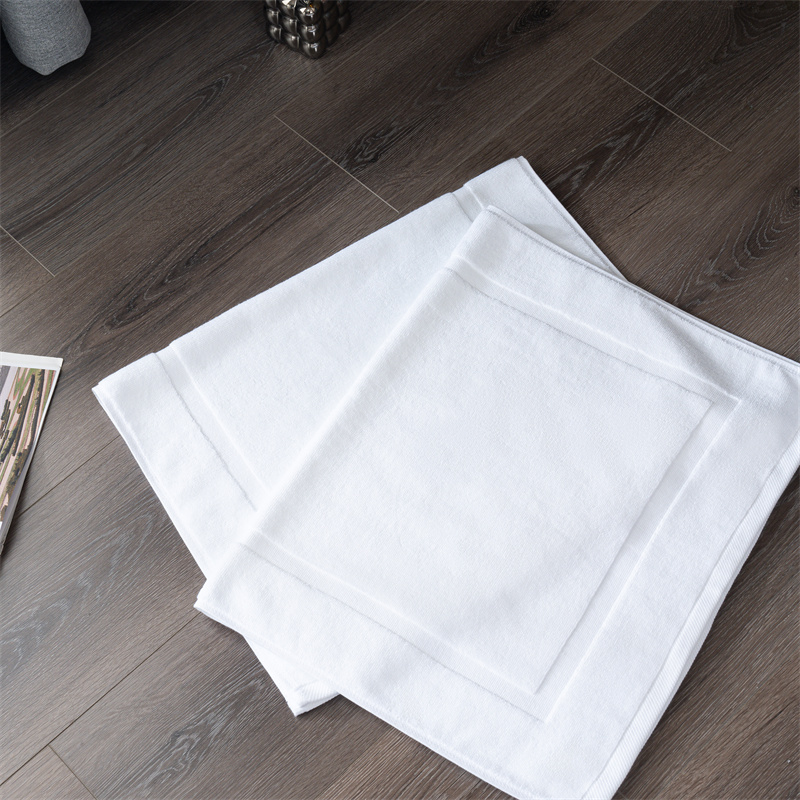
For floor applications, cotton remains dominant. High density, immediate water trapping, and heavy-duty underfoot cushioning make cotton bath mats the standard. Cotton provides superior slip-resistance and structural stability on hard bathroom floors compared to lighter linen alternatives, which tend to slide and lack the necessary pile to absorb large puddles. You need a heavy, dense fabric on the floor to prevent slip-and-fall hazards, and cotton terry provides the necessary friction and weight.
Procurement criteria for bulk purchasing floor textiles require strict attention to construction details. When sourcing Luxury 100% Cotton Hotel Bath Mats Wholesale, buyers must demand consistency in dye lots, reinforced double-needle stitched binding, and industrial wash compatibility. Evaluating supplier certifications like OEKO-TEX ensures chemical safety, while assessing supply chain reliability guarantees fulfillment for high-volume commercial orders. Check the binding on the edges; a single stitch will unravel after ten washes, rendering the mat useless.
Different fibers handle embroidery in distinct ways. Pure flax provides a stable, non-stretch canvas for intricate logos, ensuring the design remains flat. High-pile cotton blends require specific dense underlay stitching techniques to prevent the embroidery from sinking into the terry loops. Maintaining brand aesthetics on Luxury Hotel Use White Bath Towels Embroidered through hundreds of wash cycles requires careful tension management to prevent puckering around the crests. If the backing stabilizer washes away too quickly, the embroidery will distort and ruin the visual appeal of the product.
Analyzing the overall value influencing factors requires looking beyond the initial purchase order to understand the long-term operational impact of textile selection. You have to track the product from the loading dock to the laundry room to the guest room and back again.
Pure flax commands a premium upfront investment. However, calculating the break-even point reveals its value based on an extended replacement cycle. Pure flax outlasts cotton blends by several seasons under high-turnover usage. The robust nature of the flax fiber resists the thinning and fraying that typically forces the early retirement of cotton terry products. When you factor in the cost of replacing a cotton inventory three times in the lifespan of a single flax inventory, the financial metrics shift considerably.
Operational savings with pure flax are realized in the laundry room. Reduced dryer cycle times directly translate to lower energy consumption and decreased labor hours. Furthermore, cotton blends often require specific chemical softeners to maintain their plush feel. Pure flax softens naturally with water and friction alone, reducing ongoing chemical reliance and minimizing environmental impact. Shaving ten minutes off a dryer cycle across fifty loads a day results in massive utility savings over a fiscal year.
Adopting new textile standards at scale presents practical challenges. Anticipating these risks allows for smooth transitions in commercial environments. You cannot simply swap out an entire inventory overnight without preparing your staff and your guests.
The primary risk of implementing pure flax is initial guest complaints regarding stiffness, especially if users expect traditional plush terry. Mitigate this by pre-washing inventory with commercial enzyme treatments to accelerate softness before deployment. Implement clear brand messaging highlighting the eco-friendly, hygienic, and premium health benefits of flax to set appropriate user expectations. A small card in the bathroom explaining the benefits of the new textiles can turn a potential complaint into a positive brand interaction.
Cotton blends face the risk of rapid deterioration if subjected to harsh bleaching or excessive heat. To mitigate this, establish strict laundering protocols. Calibrate chemical dosing systems to avoid fiber-stripping alkalines, and utilize moisture-sensing dryer technology to prevent the over-drying that causes cotton fibers to become brittle and snap. Train your laundry staff to pull loads out when they are 95% dry and let them air-finish on the folding table to preserve the integrity of the cotton loops.
Audit current laundry processing times and energy consumption to determine if faster-drying flax textiles will yield measurable utility savings.
Conduct a tactile pilot test by introducing pure flax options in premium suites or spa areas to gauge user feedback before a full-scale rollout.
Review supplier specifications for floor textiles, ensuring all cotton mats feature double-stitched bindings to withstand industrial laundering.
Establish specific wash protocols tailored to the chosen fiber, eliminating fabric softeners for flax and optimizing detergent loads for cotton blends.
A: Pure flax can experience initial shrinkage of up to 5-7% during the first few washes if exposed to high heat. Pre-washed or garment-dyed flax minimizes this issue. Always follow specific temperature guidelines provided by the manufacturer to maintain dimensional stability.
A: It is not recommended. Cotton blends produce lint that can adhere to the textured surface of flax. Additionally, they require different drying times; washing them together results in over-drying the flax or under-drying the cotton.
A: Flax fibers contain natural pectins that give the new fabric a crisp texture. This stiffness is temporary. The fibers break down slightly and soften naturally through friction, water exposure, and regular use.
A: Yes. Because cotton blends retain moisture longer and dry slower, they provide a more hospitable environment for mildew and odor-causing bacteria if not dried completely and promptly after use.
A: Puckering occurs when the base fabric shrinks at a different rate than the embroidery thread. Ensure the manufacturer uses pre-shrunk cotton and high-quality, colorfast polyester embroidery thread with proper underlay stabilization.