Views: 0 Author: Site Editor Publish Time: 2026-07-01 Origin: Site
Guest satisfaction scores and return booking rates tie directly to a single physical asset: the quality of the sleep experience. Procurement teams face a complex challenge. They must balance the conflicting demands of providing residential-level luxury comfort with the rigorous durability and sanitation standards required for high-turnover commercial environments. Selecting the wrong sleep setup leads to premature sagging, negative online reviews, and frequent replacement cycles. This guide provides an updated, technical framework for evaluating, shortlisting, and purchasing commercial-grade hotel mattresses. By understanding structural integrity, material density, and universal comfort metrics, property managers can maximize their investment lifespan while driving positive guest feedback and repeat bookings.
Commercial vs. Retail: Standard consumer mattresses degrade rapidly in hospitality settings; true commercial units require reinforced perimeters, higher density foams, and specialized flame retardants.
The Universal Comfort Standard: A 5 star hotel quality medium-firm mattress comfort profile is statistically proven to satisfy the widest demographic of sleepers, reducing complaints regarding beds being "too hard" or "too soft."
Hybrid Dominance: Premium properties are standardizing on hybrid constructions to blend the structural integrity of pocketed steel coils with the pressure relief of advanced, breathable comfort layers.
Risk Mitigation: Successful procurement relies on consulting dedicated sleep experts, structuring rigorous pilot room testing, negotiating non-prorated commercial warranties, and planning end-to-end delivery logistics.
Retail mattresses are engineered for a single user or couple over a predictable lifecycle. Hospitality environments subject beds to extreme, unpredictable wear. Commercial-grade construction demands heavy-duty edge support, typically achieved through high-density foam encasements or reinforced perimeter coils. This structural reinforcement prevents edge collapse when guests sit on the side of the bed to put on shoes or use their laptops, a common behavior in hotel rooms. Without this reinforcement, the perimeter breaks down within the first year, creating a sloping effect that forces guests toward the floor.
Foam density is another critical differentiator. Commercial environments require higher Pounds per Cubic Foot (PCF) ratings to prevent premature sagging under continuous, multi-user wear. While a standard consumer bed might use 1.5 PCF polyfoam, hospitality platforms often mandate 1.8 PCF or higher for base layers. Internal component testing for hospitality platforms simulates over a decade of heavy use, ensuring the materials resist body impressions and maintain structural integrity far longer than off-the-shelf retail equivalents. We see properties that try to cut corners with retail beds replacing their inventory every two years, whereas a properly spec'd commercial unit easily lasts seven to ten years.
The steel coil systems in commercial units also differ vastly from consumer models. Hospitality beds utilize lower gauge steel, meaning the wire itself is thicker and more resilient. A 13-gauge or 14-gauge coil system provides the rigid support necessary to handle guests of all body types without permanently deforming. When you combine high-density foam with heavy-gauge steel, you create a sleep surface capable of withstanding the daily abuse of a fully booked property.
Achieving universal comfort is the holy grail of hospitality design. Properties cannot swap beds based on individual guest preferences, so the sleep surface must accommodate the highest percentage of back, side, and stomach sleepers. A medium-firm profile, generally rated as a 6 to 7 out of 10 on the firmness scale, provides the necessary spinal support for back sleepers while offering enough surface give to relieve pressure points for side sleepers. If a bed is too firm, side sleepers wake up with shoulder and hip pain. If it is too soft, back and stomach sleepers experience lower back strain.
There is a direct correlation between mattress-driven sleep quality and positive online review scores. Guests who experience uninterrupted, restorative sleep are significantly more likely to leave high ratings on platforms like TripAdvisor or Google, directly influencing return booking rates. To further enhance this experience, modern commercial beds integrate breathable, phase-change cover materials and open-cell cooling technologies. These innovations actively dissipate body heat, preventing night-sweat complaints that frequently plague traditional memory foam surfaces. When a guest sleeps cool and supported, they associate that physical comfort with your property's brand.
Traditional innerspring models have long been the backbone of the hospitality industry. They utilize a continuous coil or Bonnell spring system to provide robust support. These systems are built by wiring all the springs together, creating a unified support core that reacts as a single unit when weight is applied.
Highly durable under heavy use, resisting permanent body impressions better than low-density foams.
Excellent passive temperature regulation due to open coil structures that allow air to flow freely through the center of the bed.
Easily scalable for large properties due to standardized manufacturing processes.
Higher motion transfer between sleep partners, meaning one person tossing and turning can wake the other.
Potential for structural noise as springs age and the metal components rub against each other.
All-foam constructions prioritize pressure relief and motion isolation, creating a highly conforming sleep surface. These beds use dense polyurethane cores topped with layers of viscoelastic foam or latex rubber.
Superior motion isolation ensures partners do not disturb each other during the night.
Excellent pressure point relief, contouring exactly to the shape of the guest's body.
Completely silent operation with no metal components to squeak or creak.
Significant heat retention risks unless actively cooled with gel or copper infusions.
Potential edge support degradation under heavy commercial use if the base foam is not dense enough.
Natural latex options help properties achieve green building and sustainability certifications, such as LEED or Green Key, by utilizing renewable, biodegradable materials. Latex is naturally hypoallergenic and resistant to dust mites, making it an excellent choice for properties focusing on wellness and eco-conscious travel.
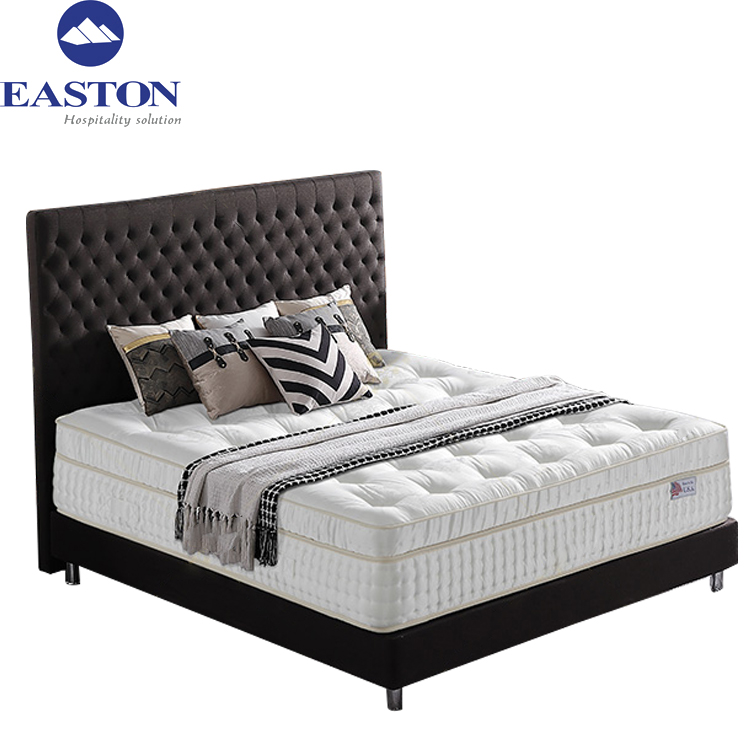
Luxury and boutique properties increasingly default to hybrid models, which combine pocketed steel coils with advanced comfort layers like gel-infused foam or natural latex. A premium Hotel King Size Hybrid Mattress 5 Star Mattress balances structural longevity with plush, conforming pressure relief. The individually wrapped pocket coils compress independently, providing targeted support while drastically reducing motion transfer. This ensures that when one guest moves, their sleep partner remains undisturbed, elevating the overall perception of luxury.
Hybrids represent the best of both worlds. You get the airflow and edge support of an innerspring combined with the pressure relief and silence of a foam bed. For properties aiming for five-star reviews, the hybrid construction is the most reliable way to satisfy the widest range of guest preferences while maintaining the structural integrity required for commercial use.
Procurement teams must analyze technical specifications rather than relying on marketing claims. Coil gauge determines the thickness of the steel wire; a lower gauge indicates thicker wire. For commercial applications, a 13 to 14-gauge coil system provides the ideal balance of rigid support and flexibility. Coil count should also be evaluated relative to the mattress size, ensuring adequate point-elasticity across the entire surface. A king-size bed should feature a high enough coil count to prevent dead spots where support drops off.
Foam density ratings are non-negotiable for commercial longevity. Establish a baseline of at least 1.8 PCF for polyfoam comfort layers and 4.0 PCF for high-durability memory foam. Furthermore, assess material safety standards rigorously. Ensure all foam components carry CertiPUR-US® certifications, verifying they are made without ozone depleters, heavy metals, or certain flame retardants. Textiles should ideally carry OEKO-TEX® certification, confirming they are free from harmful substances.
Component | Retail Standard | Commercial Hospitality Standard |
|---|---|---|
Polyfoam Density | 1.2 - 1.5 PCF | 1.8+ PCF |
Memory Foam Density | 2.5 - 3.0 PCF | 4.0+ PCF |
Edge Support | Standard foam rails | High-density encasement or heavy-gauge perimeter coils |
Coil Gauge | 14.5 - 15 (Thinner) | 13 - 14 (Thicker, more durable) |
Fire Barrier | Chemical sprays or fiberglass | Fiberglass-free inherent FR knit socks |
Hospitality beds must adhere to strict regulatory standards. Mandatory Fire Retardant (FR) compliance, such as 16 CFR Part 1633 in the United States, dictates how a mattress must perform when exposed to an open flame. Modern commercial units utilize fiberglass-free FR barriers, which provide essential safety without the health risks associated with fiberglass contamination if the cover is compromised. Using fiberglass-free materials protects your housekeeping staff and guests from airborne irritants.
Hygiene is equally critical. Commercial beds require active antimicrobial treatments to resist mold and bacteria buildup. Bed bug resistance is a major operational concern; integrating commercial-grade waterproof, breathable encasements protects the physical asset from infestations, spills, and bodily fluids, drastically extending the usable life of the inventory. A proper encasement locks out allergens and prevents moisture from degrading the internal foam layers, which is a common cause of premature sagging.
Ensuring a consistent sleep experience across hundreds of rooms or multiple international locations requires strategic vendor partnerships. Procurement teams should work directly with hospitality sleep consultants to customize comfort layers based on regional demographics and property-specific needs. Custom manufacturing partnerships often provide better long-term value and consistency than purchasing off-the-shelf commercial lines, allowing properties to dictate exact material specifications and brand standards.
When you standardize your sleep assets, you streamline housekeeping operations. Staff only need to learn one set of maintenance protocols, and replacement parts or warranty claims become much easier to manage. Working with a dedicated consultant ensures that the beds you install in a humid coastal property perform just as well as those in a dry mountain resort, adjusting cover materials and foam types to suit the local climate.
Commercial warranties differ significantly from consumer guarantees. It is vital to differentiate between prorated and non-prorated terms. A non-prorated warranty covers the full replacement value of the defective unit for the stated duration, whereas a prorated warranty reduces the coverage value over time. Procurement teams must examine the fine print regarding sagging thresholds. A warranty that triggers at a 0.75-inch indentation offers vastly superior protection compared to one that requires a 1.5-inch defect before a claim is honored.
You must also verify what voids the warranty. Many manufacturers will void a claim if the bed is found without a proper waterproof encasement or if it is placed on an incompatible foundation. Ensuring your existing bed bases meet the manufacturer's structural requirements before installation saves significant headaches down the road.
Evaluating manufacturers requires a structured ranking framework. Compare top-tier commercial manufacturers against retail bed-in-a-box brands that are expanding into commercial spaces. Structure and negotiate pilot room testing before committing to a portfolio-wide rollout. Establish clear Key Performance Indicators (KPIs) for evaluating these pilot rooms, including guest feedback cards, repeat guest preferences, and housekeeping feedback regarding the ease of handling and making the bed.
A successful pilot program runs for at least 60 to 90 days. This gives the beds time to break in and allows you to collect data from a wide variety of guests. Pay close attention to housekeeping reports during this phase. If a bed is too heavy to lift for sheet changes, it will slow down room turnover times and potentially lead to staff injuries.
The hidden costs of deployment can quickly derail a procurement budget. White-glove delivery, room staging, and packaging removal require precise coordination. Navigating historic properties with narrow corridors or elevator constraints demands specialized logistics planning. Strategic operational scheduling is paramount. Orchestrate old mattress liquidation, recycling, and removal during low-occupancy windows to ensure daily operations and guest experiences remain undisrupted.
Work with vendors who offer comprehensive installation services. Having a team that unboxes the new units, places them on the foundations, and hauls away the old inventory and packaging materials saves your engineering and housekeeping teams hundreds of hours of manual labor. Ensure the vendor has a clear plan for recycling the old beds to align with your property's sustainability goals.
Implementing strict Standard Operating Procedures (SOPs) for housekeeping maximizes the lifespan of the sleep assets. Establish clear rotating schedules, such as a 180-degree rotation every quarter, to ensure even wear across the surface. Detail routine inspection protocols for housekeeping staff to identify early structural failures, edge degradation, or hygiene issues. Catching these problems early allows for warranty claims or targeted replacements before a degraded bed impacts a guest's review.
Housekeeping should also be trained to inspect the waterproof encasements during every deep clean. A small tear in the encasement compromises the entire bed. Keeping spare encasements on hand allows for immediate replacement, protecting the core asset from liquid damage.
Request detailed commercial specification sheets from shortlisted manufacturers to verify coil gauge and foam density.
Schedule a technical consultation with a hospitality sleep expert to align comfort profiles with your target guest demographic.
Order sample units and implement a 30-day pilot room testing phase to gather actionable guest and staff feedback.
Audit your current disposal and recycling protocols to ensure seamless liquidation of old inventory during the upgrade process.
A: Commercial-grade units feature reinforced edge support, higher density foams, and thicker coil gauges designed to withstand continuous, multi-user wear. They undergo rigorous simulated testing to ensure they do not sag prematurely in high-turnover environments.
A: Manufacturers layer high-density support cores with specialized transition and comfort foams. This creates a balanced firmness rating that provides necessary spinal alignment for back sleepers while offering enough surface contouring to relieve pressure points for side sleepers.
A: Hybrids combine the extreme durability and airflow of pocketed steel coils with the pressure relief and motion isolation of advanced foams. This dual-construction prevents sleep partner disturbance while maintaining a luxurious, conforming feel.
A: Properties typically replace their inventory every five to seven years. Strict maintenance protocols, such as quarterly rotations and the use of waterproof encasements, can extend this lifespan and prevent early degradation.
A: They must meet strict federal flammability standards, such as 16 CFR Part 1633 in the US. Premium commercial units achieve this using fiberglass-free fire retardant barriers to ensure guest and staff safety.
A: Properties order a small batch of sample units to install in designated pilot rooms. Management collects data over 30 to 90 days using guest feedback cards and housekeeping reports before approving a portfolio-wide purchase.
A: Sleep quality is the primary driver of guest satisfaction. A supportive, temperature-regulated bed prevents complaints of back pain or night sweats, leading directly to higher review scores and increased return booking rates.